


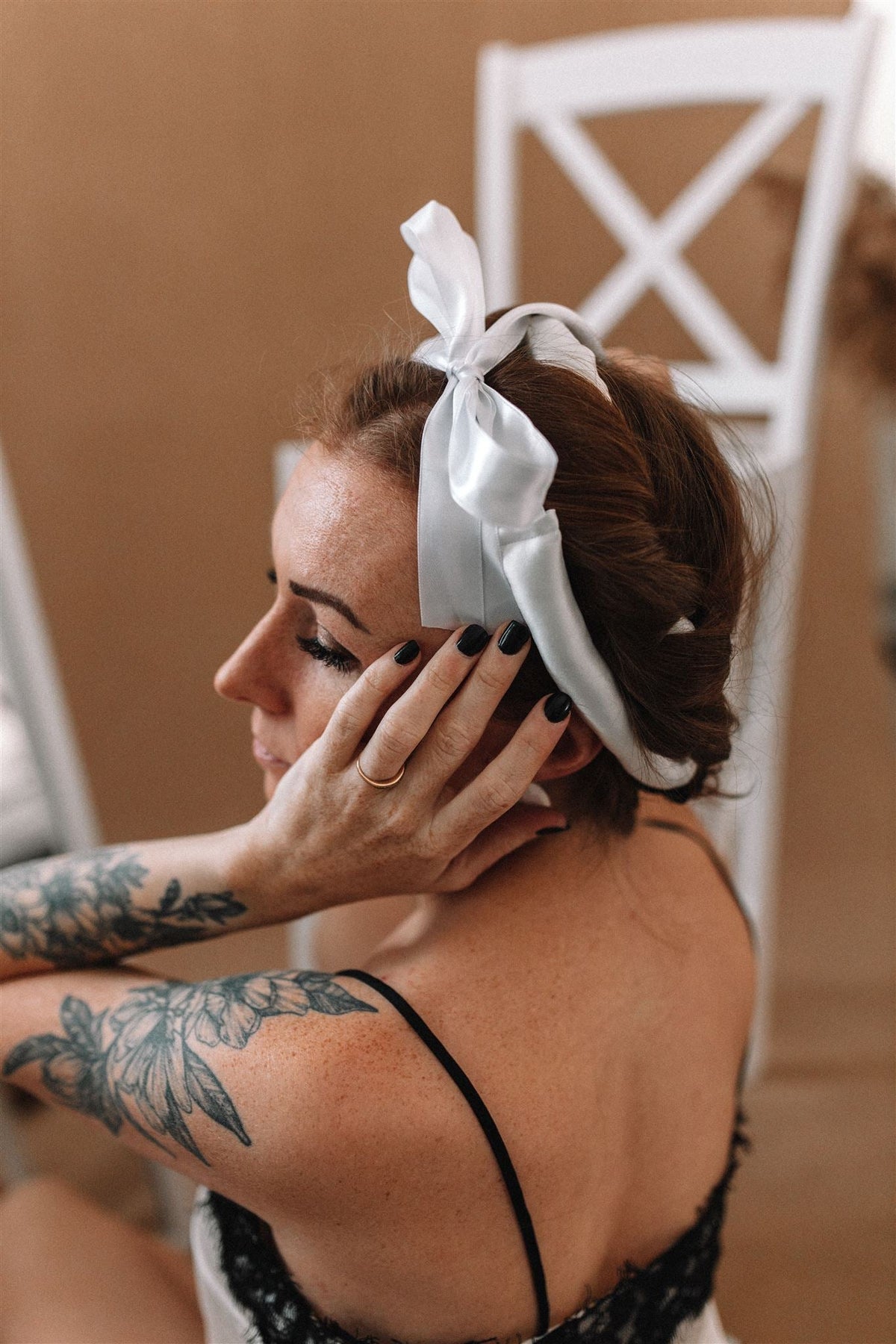
The best overnight heatless curler is not simply the one that produces the prettiest curls in a product photo. It is the one you can wear comfortably, keep secure and remove gently in the morning. That is a different decision from choosing a curl diameter.
I am Sabine, founder of Kaleja Silks. I usually sleep with our Classic wrapped around my long, thick, straight hair. I know comfort is individual: someone who sleeps flat on their back will experience a rod differently from a sensitive side sleeper. Here is how I compare six designs before spending money.
My overnight curler comparison table
| Design | Potential comfort advantage | Possible problem | Curl goal |
|---|---|---|---|
| Soft, single silk-covered 2.5 cm rod | One padded shape, smooth cover | May sit where your head meets the pillow | Defined curls |
| Soft, large 4 cm rod | Broad soft surface | Larger profile at the side of the head | Loose waves |
| Four small padded rods | Position can be adjusted by section | Multiple pressure points | Blowout movement |
| Soft foam rollers | Light materials | Fasteners may press into the scalp | Multiple curl sizes |
| Fabric strips or socks | Flexible household material | Bulky knots and uneven hold | Casual waves |
| Rigid or Velcro rollers | Useful during daytime | Hard surfaces or snagging | Volume and rounded ends |
These are design-based observations, not controlled comfort scores. I would never label any curler 'guaranteed comfortable for everyone'.
1. A soft 2.5 cm single rod: my practical favourite
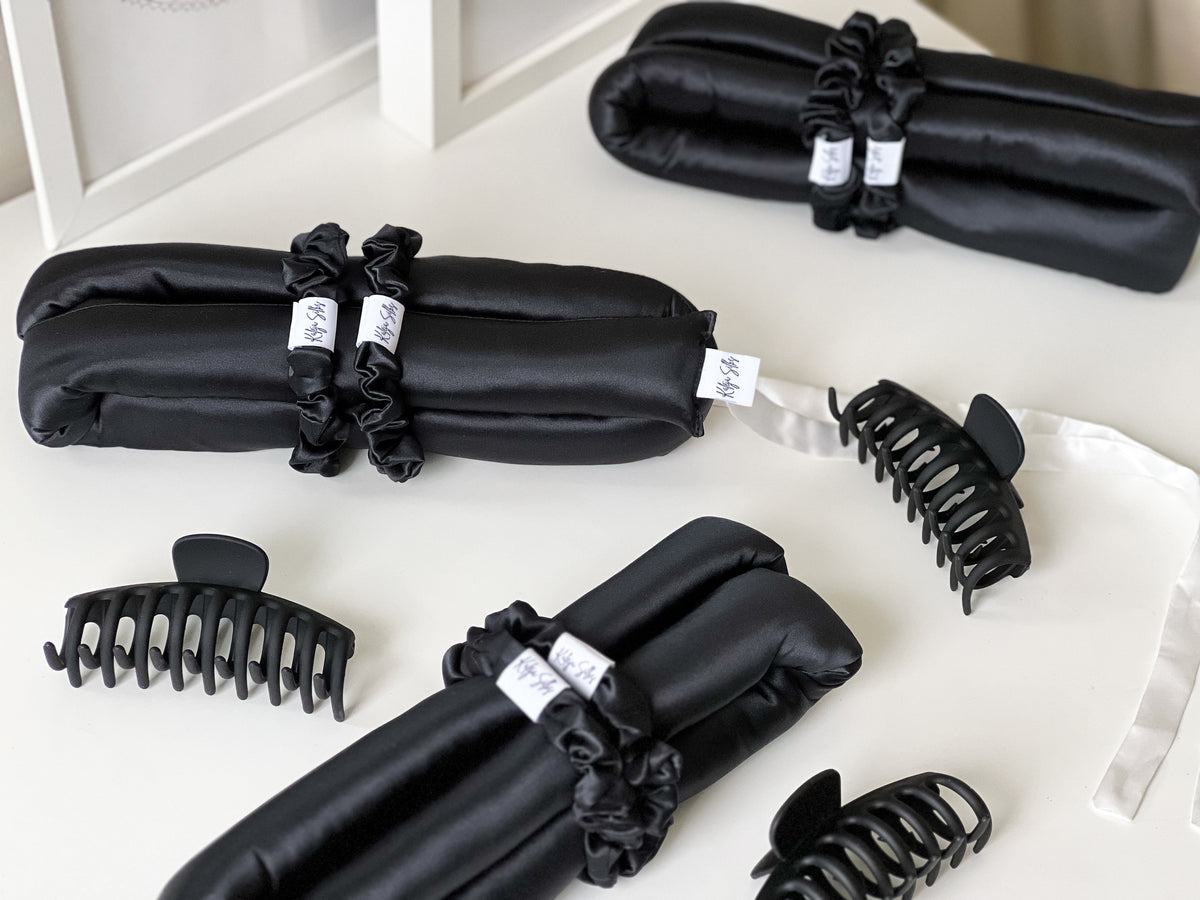
The Classic silk heatless curler has a padded body, 100% Mulberry silk outer fabric and fabric ties to secure the ends. I like being able to change the curl result without changing the system: small sections for definition, larger sections for a softer wave. Its 2.5 cm profile feels manageable for my usual sleep routine.
Before purchase, check where the rod will sit when you put your cheek on the pillow. If the side of your head is sensitive, adjust the placement rather than pulling the hair tighter. Best fit: a person who wants a consistent overnight habit with curls that can be varied.
2. A large single rod: comfort depends on how you sleep
Our 4 cm Large model creates broader curves and airy volume on medium-to-long hair. It is still a soft padded design, but the larger diameter is noticeable compared with Classic. A person who values loose waves may happily accept that trade-off.
Best fit: long hair and soft, full movement. Think twice: if you are easily bothered by pressure when sleeping on your side.
3. Four separate rods: flexible positioning, more contact points
Our Blowout set uses four 2.5 cm rods, giving more freedom to place and direct different hair zones. That is valuable for layered hair or a salon-inspired, airy blowout look. The downside is that each rod becomes another object to position for sleep.
Best fit: someone who prioritises a multi-directional finish and is happy to learn four-zone wrapping. Think twice: if you prefer one continuous rod with fewer pieces.
4. Soft foam rollers: lightweight but numerous
Foam is not automatically uncomfortable. Many people use small foam rollers successfully. The practical problem is distribution: six or eight rollers can create several raised spots against the pillow, and closures may be firmer than the foam itself.
Best fit: people willing to test different placements and sizes. I would choose models without sharp edges, clips or exposed hard parts.
5. Fabric strips and socks: soft material, unpredictable knots
A sock or fabric strip can feel gentle in one position and bulky in another. The seam or knot often matters more than the fabric. This method can work when you want to try heatless curls at no extra cost, but the shape may be less repeatable.
Best fit: occasional experiments. For a nightly routine, I prefer something with a defined diameter and secure fastening.
6. Rigid and Velcro rollers: not my overnight pick
A rigid roller may create a useful shape during the day, but hard contact against the pillow is less appealing at night. Velcro rollers can also catch loose strands. I would reserve this design for daytime root volume instead of using it as a sleep-first product.
Best fit: awake, short styling sessions rather than a full night.
The five-point buying checklist I use
- Contact points: where will the tool press when I lie in my usual position?
- Fastening: will it stay put without pulling at the roots?
- Surface: is the outer fabric smooth, with neat seams and no sharp attachments?
- Shape: do I want a single curl pattern or four independently directed zones?
- Maintenance: can I keep the product clean and follow its care instructions?
Silk is my preferred covering because I like the smooth surface against the strands for several hours. It is not a substitute for good padding or correct placement. Nor is softness proof that a poorly fastened curler will stay on your head.
Why choosing heatless matters when you style often
Repeated curling-iron exposure at excessive heat can damage hair fibres. The American Academy of Dermatology advises limiting heat and keeping curling-iron contact brief. A published study of curling-iron treatments documented surface damage after thermal exposure. The advantage of an overnight heatless system is avoiding direct hot-metal contact, not guaranteeing zero stress to hair.
Never wrap tightly enough to cause scalp pain. I would also avoid sleeping with hair that is soaking wet under thick layers: it may not dry by morning. I personally use the curler on dry hair, and I remove it slowly rather than pulling it through the lengths.
My choice by sleeping preference
| Your priority | I would consider |
|---|---|
| One soft, straightforward design | Classic |
| Loose waves with sufficient hair length | Large |
| More control over separate sections | Blowout |
| Lowest initial cost | Soft foam rollers or fabric strips |
| Very short hair | Small individual rollers rather than our long rods |
For my own night routine, Classic remains my first choice. For someone who wants deliberately soft waves or a blowout effect, I would choose the other two designs instead. Compare Kaleja Silks models to see the exact specifications. If you already own a curler and want wrapping and sleeping tips, use my overnight technique guide rather than this buyer comparison.
Frequently asked questions
Are heatless curlers safe to sleep in?
They can be part of a comfortable routine when soft, properly placed and not overly tight. Remove the curler if you feel pressure, pulling or scalp pain.
Is one rod more comfortable than four?
Neither is universally better. One rod means fewer pieces; four allow different placements. Your preferred sleep position decides more than a ranking does.
Should I sleep with damp hair wrapped around a curler?
If using moisture, keep it very light and make sure the hair can dry completely. Dry hair is my own preferred starting point.
Do bigger heatless curlers make bigger waves?
Generally yes, though section size and hair type also influence the final shape.
Share:
Silk Scrunchie Reviews: What Customers Actually Notice
7 Types of Heatless Curlers Compared: Which Should You Buy?