


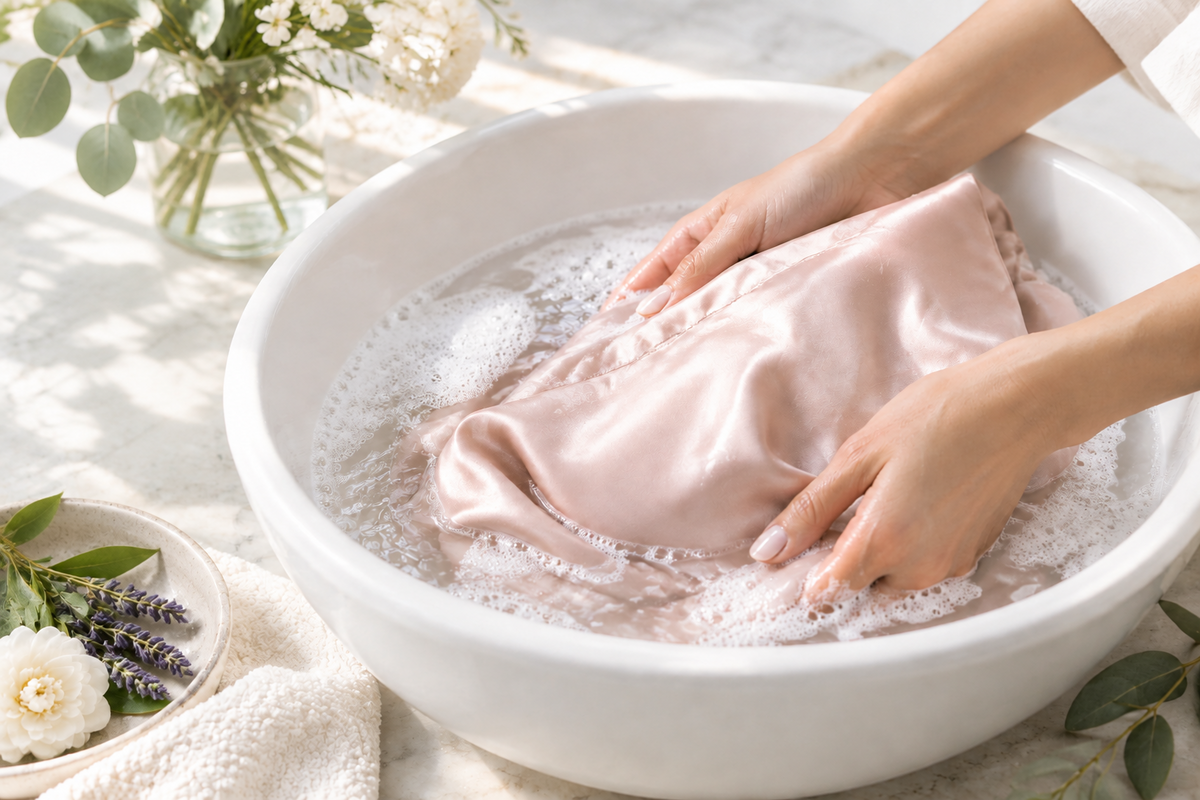
How often should you wash a silk pillowcase? For most people, I would use roughly once a week as a practical starting point, similar to other bedding that directly touches your skin. Wash it more often if you sweat heavily, use oily hair products, are unwell or simply prefer a fresher surface.
The important difference is not that silk needs to be washed less. It is that silk needs to be washed more gently. I would rather wash a silk pillowcase regularly with the right method than leave it on the bed for weeks because the fabric feels too precious to clean.
Why wash a silk pillowcase weekly?
Your pillowcase collects skin oils, sweat, skincare, hair products and environmental debris like other bedding. The Cleveland Clinic notes that weekly washing is a common recommendation for sheets and bedding that stays in close contact with the body.
I see once a week as an easy routine to remember. It is not a rigid medical rule, and some people will need more or less frequent washing depending on their habits.
When should you wash it more often?
- you sweat heavily at night;
- you use oily hair treatments, leave-in products or scalp oils;
- you apply heavy skincare that transfers to the fabric;
- you are ill;
- pets regularly sleep on the pillow;
- the pillowcase has visible product build-up, stains or odour;
- your dermatologist has advised a more frequent clean-bedding routine.
Does acne mean you should wash it every day?
Not automatically. Acne is not simply a dirty-pillowcase problem. However, clean bedding is sensible, especially if hair or skincare products transfer to it.
The American Academy of Dermatology advises washing pillowcases and sheets when oily hair products may be contributing to breakouts. I would follow your skin's needs and professional advice rather than assume silk itself prevents acne.
Can washing silk too often damage it?
Frequency is only part of the story. Harsh washing can damage silk much faster than a regular gentle routine. Hot water, bleach, aggressive detergents, high friction and tumble drying are bigger concerns than simply washing once a week.
I would rather wash regularly and gently than wash rarely and aggressively.
How should you wash a silk pillowcase?
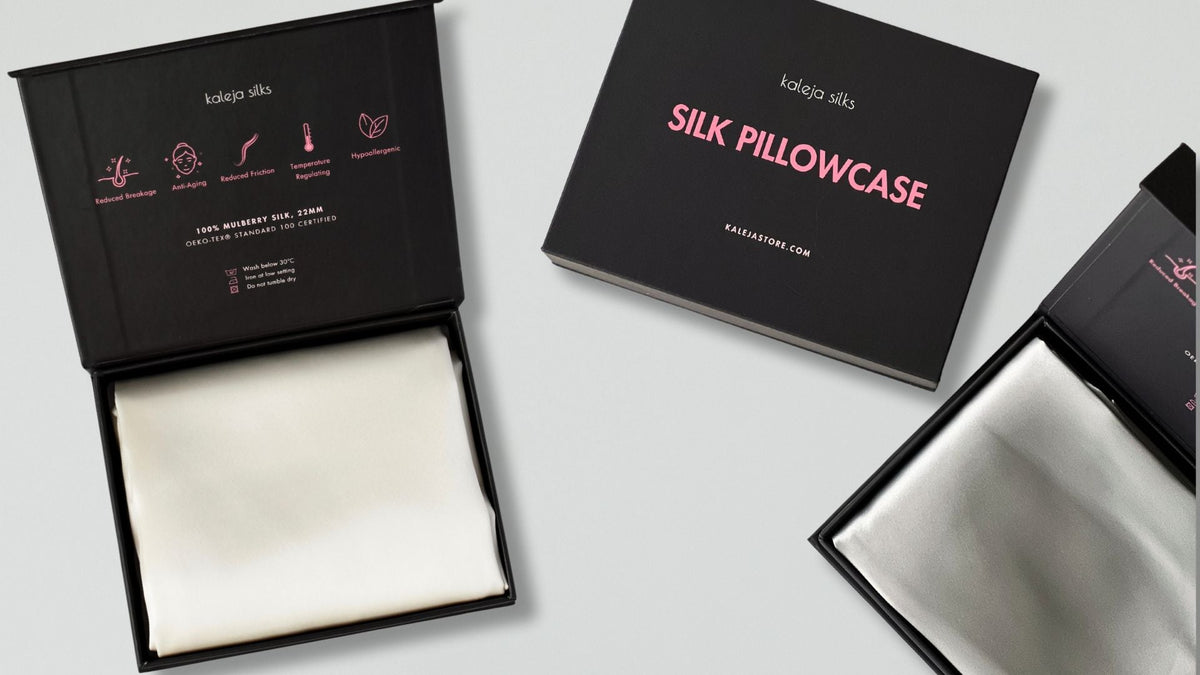
Always check the care label for your exact product. For Kaleja Silks, the goal is to protect the silk surface and construction.
- Use cool or lukewarm water.
- Choose a pH-neutral, silk-friendly or delicate detergent.
- Avoid bleach and harsh stain removers.
- Keep mechanical action gentle. Do not scrub or wring the fabric.
- If machine washing is allowed by the care label, use a delicates bag and gentle cycle.
- Air dry away from direct high heat and strong sunlight.
Should you hand wash or machine wash silk?
Follow the product label first. Hand washing gives you more control over mechanical stress. A suitable delicate machine cycle can also be practical when the product instructions allow it.
The goal is not to make silk care complicated. It is to avoid the things silk dislikes most: harsh chemistry, high heat and excessive friction.
Should you wash silk inside out?
Turning the pillowcase inside out can help protect the visible outer surface, especially in a machine. If it has a zipper, make sure the closure is handled according to the care instructions so it does not catch on other items.
Can you tumble dry a silk pillowcase?
I prefer air drying. High heat and aggressive tumbling create unnecessary stress for a delicate protein fibre. Keep it away from strong direct heat and follow the product label.
Can you use fabric softener on silk?
I would avoid it unless the manufacturer specifically says otherwise. A silk-friendly detergent is enough. More products do not automatically mean better care.
How do you remove skincare or hair-oil stains?
Treat stains early and gently. Do not scrub hard. Use a small amount of suitable silk detergent and follow the care label rather than reaching for strong stain removers designed for durable cotton laundry.
Why I like having two pillowcases in rotation
This is one of the easiest ways to make silk practical. One pillowcase can be on the bed while the other is being washed and air dried. You do not end up delaying laundry because the fabric needs more drying time than ordinary bedding.
How does washing affect the life of the pillowcase?
Good care supports longevity. Repeated hot washes, harsh detergents and tumble drying can shorten the useful life of silk. Gentle regular washing is part of owning the material, not something to fear.
What exactly are you washing at Kaleja Silks?
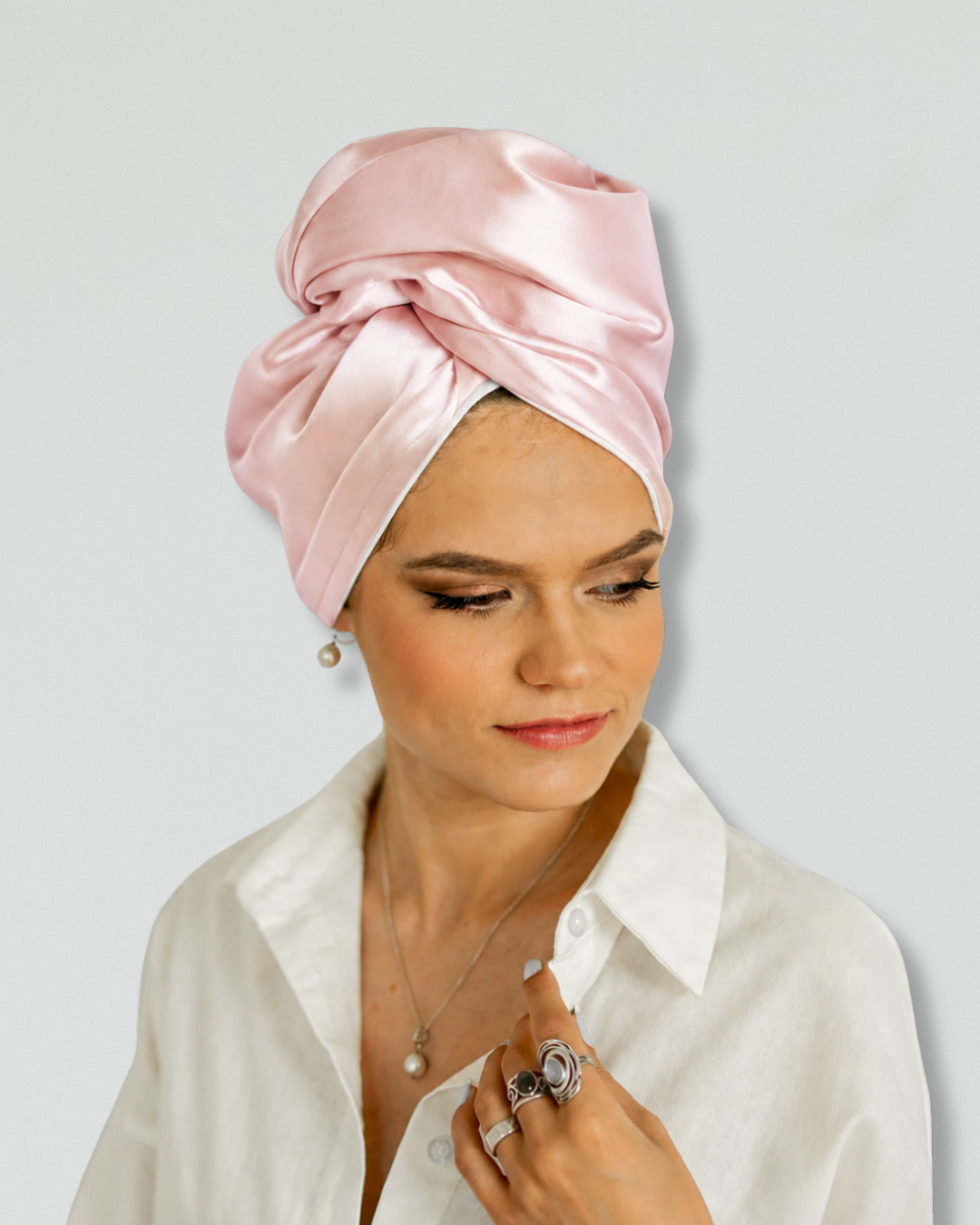
Our Mulberry Silk Pillowcase is 22 momme 100% Mulberry silk with a zipper closure. I treat it as a premium everyday textile: use it, wash it and care for it, rather than saving it for special occasions.
Frequently asked questions about washing silk pillowcases
Should I wash a silk pillowcase every week?
Once a week is a practical starting point for many people. Adjust frequency for sweat, product transfer, illness and your own hygiene preferences.
Can I wash silk every few days?
You can when needed, but use a gentle method. The quality of the wash matters as much as frequency.
What detergent should I use?
Use a pH-neutral detergent labelled for silk or delicate fabrics, following the product care label.
Can I use hot water?
I would avoid hot water unless the exact care label says otherwise. Cool or lukewarm water is the safer default for silk.
Can I put a silk pillowcase in the dryer?
I prefer air drying because it avoids unnecessary heat and tumbling stress.
Share:
How Long Does a Silk Pillowcase Last? Care, Wear and Replacement
Silk Pillowcase Reviews: What Customers Actually Notice