


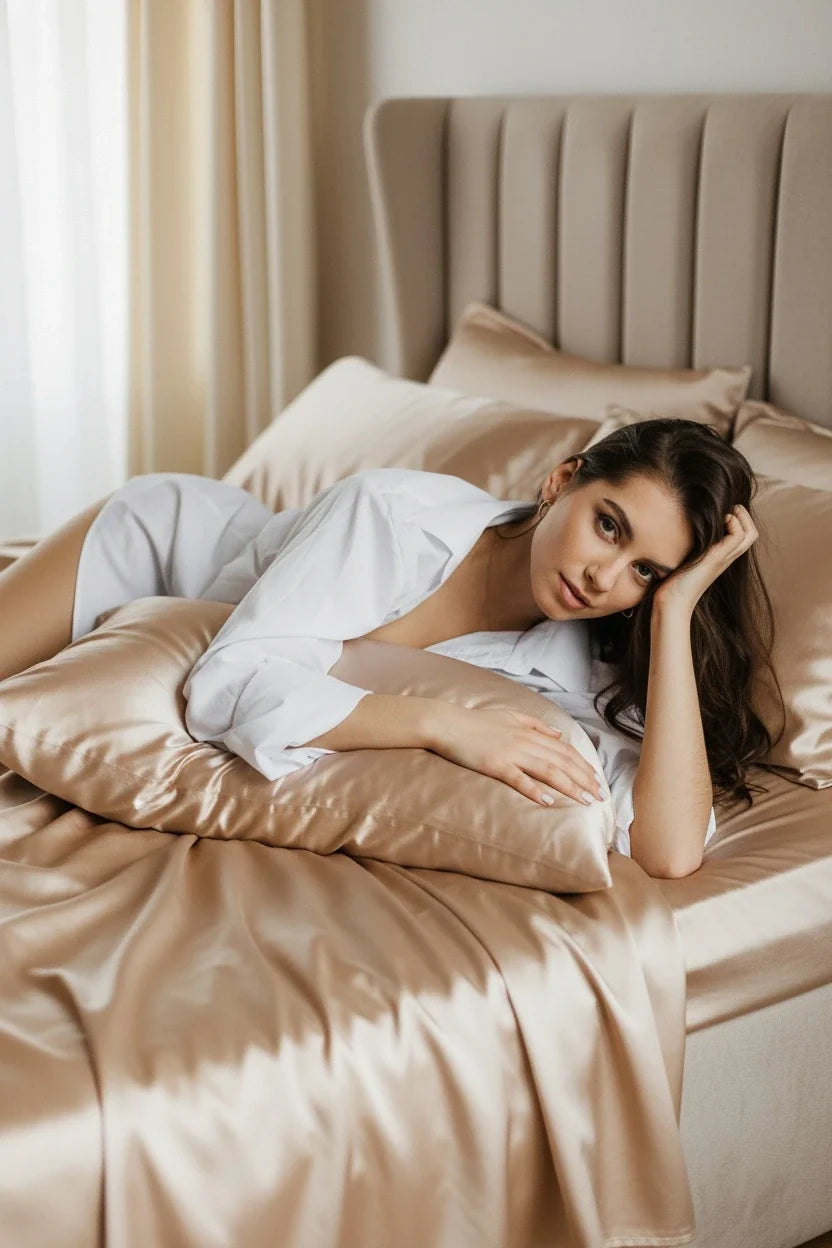
Choosing a silk pillowcase should be easier than comparing dozens of glossy product photos. If I had to reduce the decision to one principle, it would be this: buy the specification, not the shine.
At Kaleja Silks, I want a customer to understand what they are comparing before deciding whether a silk pillowcase is worth it. The most useful details are fibre content, momme, size, construction, care and seller transparency.
How do you choose a silk pillowcase?
Short answer: look for clearly stated 100% silk or 100% Mulberry silk, a useful momme specification, the correct pillow size, a secure closure, practical care instructions and enough seller information to compare quality confidently.
1. Check that it is actually silk
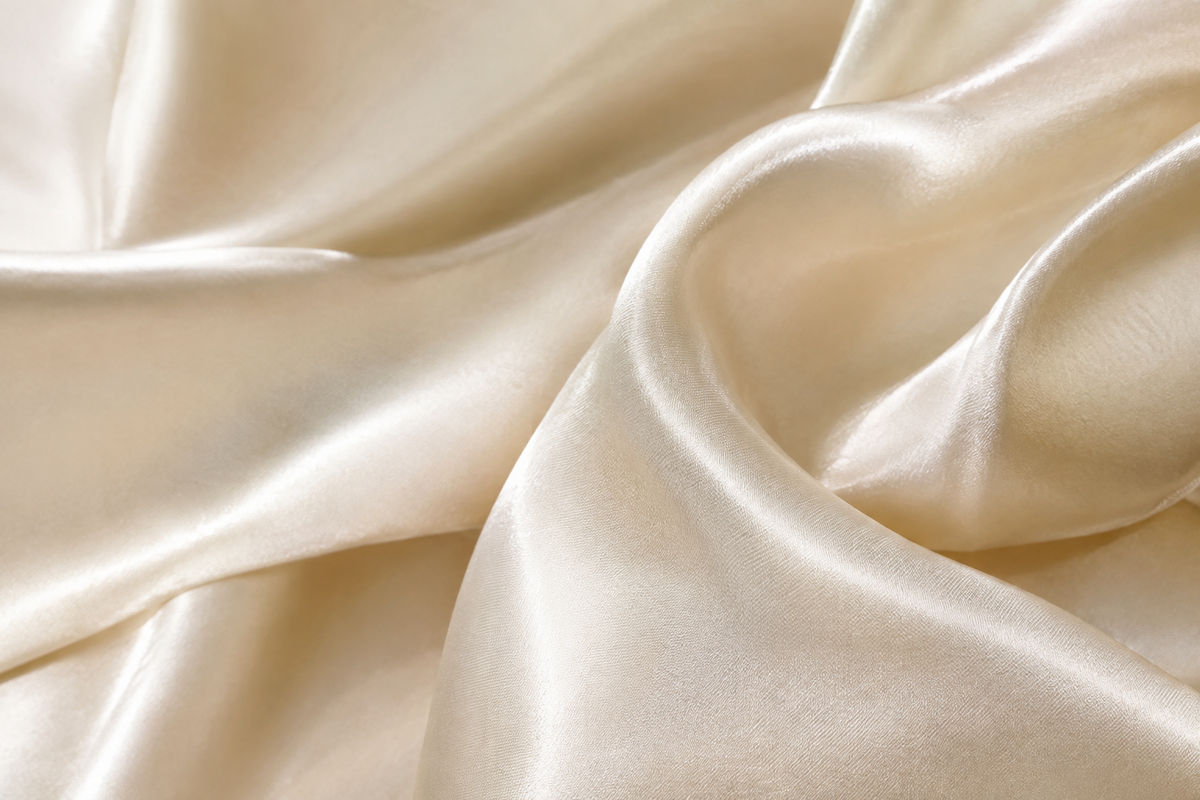
The words "silky" and "satin" do not mean 100% silk. Satin is a weave and can be made from polyester. If natural silk is what you want, the fibre content should state it clearly.
Our Kaleja Silks pillowcase is specified as 100% Mulberry silk.
2. Understand the momme number
Momme is a traditional measure used for silk fabric weight and density. It is useful because two products described simply as "silk pillowcases" may use fabrics with different weights.
Kaleja Silks pillowcases are specified as 22 momme. I would treat momme as one quality parameter, not as a universal score. Fibre composition, weave, finishing and sewing still matter.
3. Choose the correct pillowcase size
Measure your pillow instead of assuming every standard is the same. A beautiful pillowcase that pulls tightly across an oversized pillow or hangs loosely from a smaller one is not a good fit.
Check both width and length in centimetres, especially when buying across different European markets.
4. Check the closure
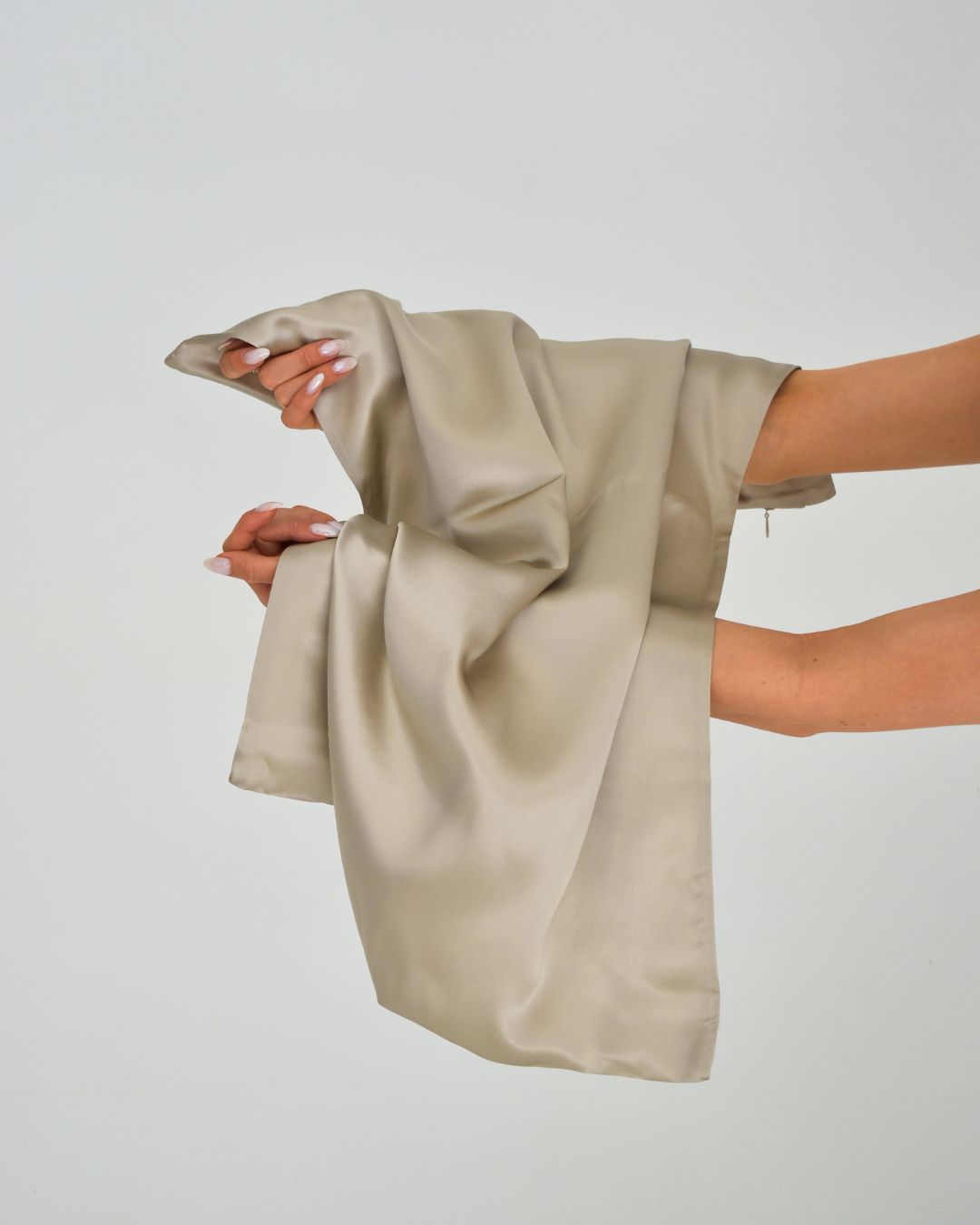
Zipper and envelope closures each have advantages. A zipper can keep the pillow neatly inside, while an envelope closure has no hardware. The important question is whether the closure is well constructed and comfortable for your sleeping position.
5. Look at seams and finishing
Silk is only one part of a finished pillowcase. Straight seams, neat finishing and a well-installed closure affect how the product feels and how well it holds up to repeated washing.
6. Read the care instructions before you buy
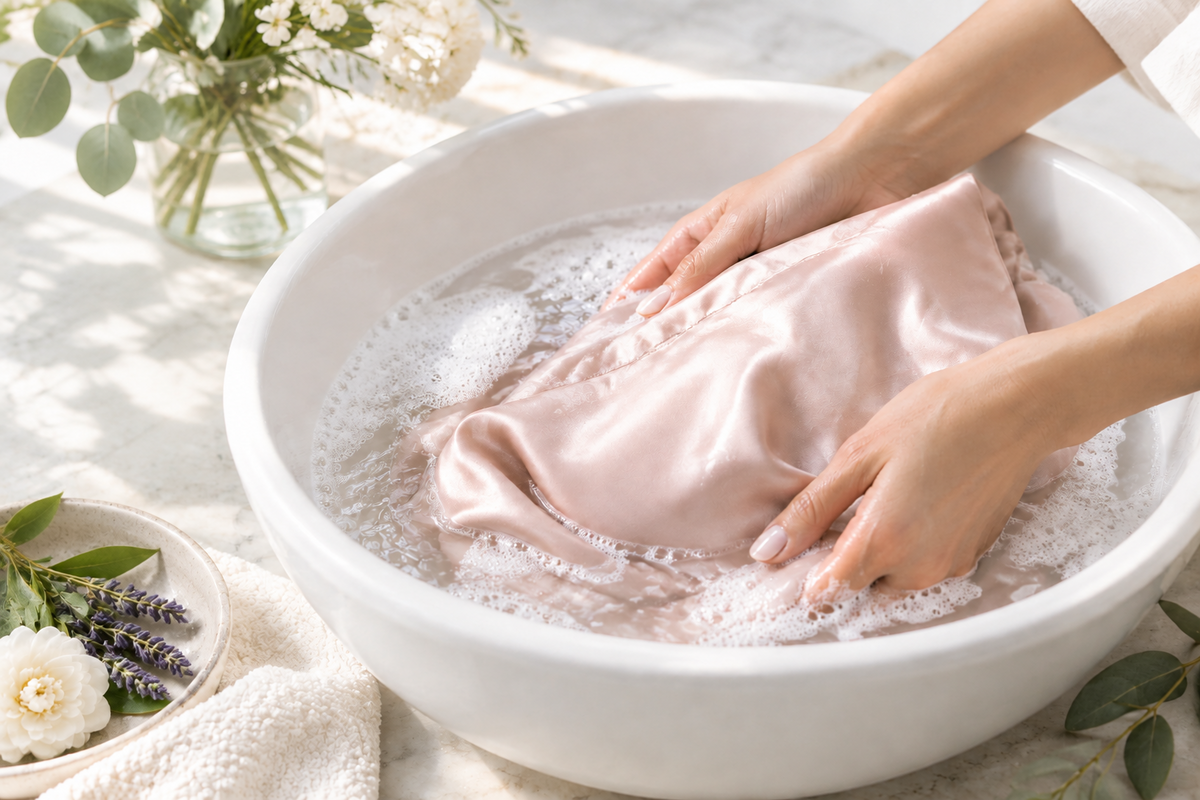
A silk pillowcase is an everyday textile, not a display object. If the care routine feels unrealistic for you, that matters. Check whether the specific product can be hand washed or machine washed on a delicate cycle and how it should be dried.
You can read our full silk washing and care guide before buying.
7. Check reviews, returns and seller details
Reviews can tell you things a specification cannot: how the colour looks in real bedrooms, whether the zipper feels comfortable, how the pillowcase looks after repeated use and whether the size is as expected.
I also check whether the store clearly publishes returns, shipping, contact details and company information. A premium material deserves premium transparency.
Silk pillowcase buying checklist
| Check | What to look for |
|---|---|
| Fibre | Clear 100% silk or 100% Mulberry silk statement |
| Momme | A stated fabric weight, such as 22 momme |
| Size | Dimensions that match your pillow |
| Closure | Secure, comfortable construction |
| Finishing | Neat seams and consistent sewing |
| Care | Realistic washing and drying instructions |
| Trust | Reviews, returns, shipping and contact information |
Is 22 momme good for a silk pillowcase?
22 momme is a popular premium specification for silk pillowcases because it provides a substantial fabric weight while still retaining the smooth feel associated with silk. It is not the only acceptable momme value, and the number should be considered alongside fibre content and construction.
Is Mulberry silk good for pillowcases?
Mulberry silk is widely used for premium pillowcases because it can be made into fine, smooth silk fabrics. When you see the term, check that the product also clearly states its fibre composition rather than using "Mulberry" as an isolated marketing word.
Questions people ask before buying a silk pillowcase
Is a silk pillowcase better than a satin pillowcase?
If by satin you mean polyester satin, you are comparing different fibres. Both can feel smooth. Choose based on whether you want natural silk, your budget, care preferences and the actual product specification.
Does a silk pillowcase help hair?
The practical hair-care advantage is the smooth contact surface, which can reduce unnecessary friction and snagging compared with rougher textiles. It is not a treatment for hair loss or hair growth.
Does a silk pillowcase prevent wrinkles?
I would not sell a pillowcase as a medical or anti-ageing treatment. A smooth surface can reduce sleep-related friction and temporary fabric creases, but skin ageing has many biological and environmental causes.
How many silk pillowcases do I need?
One is enough to try the material. Two can make weekly washing easier because you have a clean replacement while the other is drying.
What colour silk pillowcase should I choose?
Colour is mainly a design decision. I would choose it after confirming the material, momme, size and care, not before.
My recommendation
If the product page cannot clearly answer what the pillowcase is made from, how heavy the silk fabric is, what size it is and how to wash it, I would keep looking. A good silk pillowcase should be easy to understand before it arrives at your door.
Share:
Silk for Hair: Benefits, Limits and What to Expect
How Long to Leave Heatless Curls In? 3 Hours vs Overnight