


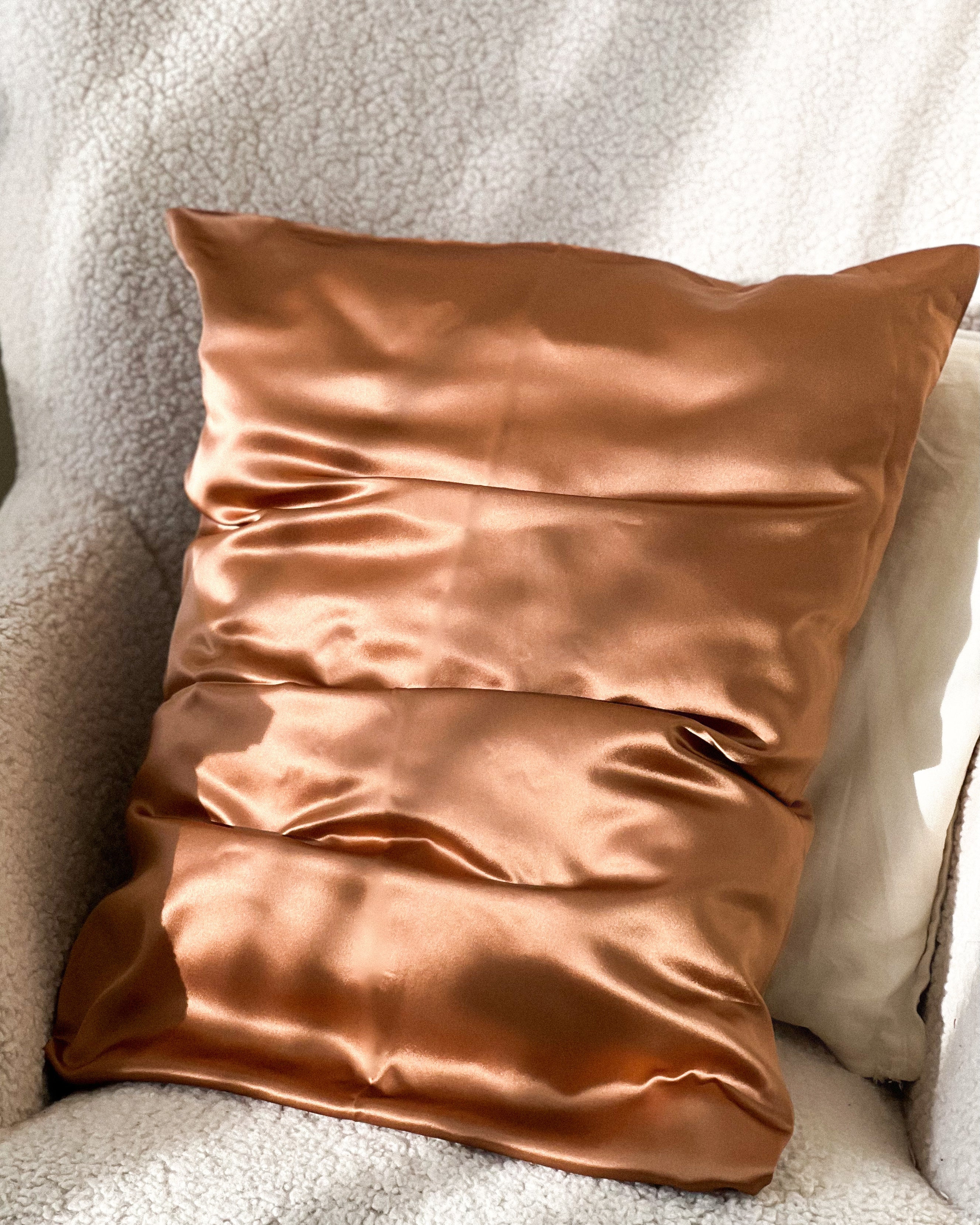
Silk vs satin is one of the most common comparisons in sleep and hair care, and the terms are often used as if they mean the same thing. They do not. Silk is a fibre, while satin is a weave. A satin fabric can be made from silk, polyester, nylon or another fibre.
As the founder of Kaleja Silks, this is one of the distinctions I think every shopper should understand before comparing prices. A glossy pillowcase can be silk satin, polyester satin or another satin fabric. The shine alone does not tell you what the material is.
Silk vs satin: the short answer
| Question | Silk | Satin |
|---|---|---|
| What is it? | A natural protein fibre | A type of weave |
| Can it be synthetic? | No, silk itself is a natural fibre | Yes, satin is often made from polyester |
| What should you check? | Fibre composition and quality details | Which fibre the satin is made from |
| Can both feel smooth? | Yes | Yes |
What is silk?
Silk is a natural protein fibre. Mulberry silk is associated with silk produced by Bombyx mori silkworms and is widely used for premium silk textiles. A silk fabric can be woven in different ways, including a satin weave.
For silk pillowcases, you may also see a momme value. Momme describes silk fabric weight and density. At Kaleja Silks, our Mulberry silk pillowcases are specified as 22 momme.
What is satin?
Satin describes how yarns are woven to create a smooth surface with characteristic sheen. Because satin is a weave rather than a fibre, it can be made from several materials. Today many lower-priced satin pillowcases are made from polyester.
This is why the phrase "satin pillowcase" is incomplete if your goal is to know the actual material. The next question should be: satin made from what?
Is satin the same as silk?
No. A product can be both silk and satin if silk fibre is woven in a satin structure. A polyester satin pillowcase is satin, but it is not silk. A product description should make the fibre content clear.
Silk or satin pillowcase: which should you choose?
If you specifically want a natural silk pillowcase, look for a clear fibre statement such as 100% silk or 100% Mulberry silk. If your priority is a smooth-feeling surface at a lower price, polyester satin can be a practical option.
My rule is simple: do not pay a silk price for a product when the seller only tells you that it is "satin". Check the fibre content, momme if relevant, construction, care instructions and reviews.
Is silk better than satin for hair?
This question is slightly misleading because silk and satin are not direct opposites. For hair, a smooth surface can reduce unnecessary mechanical friction compared with a rougher textile. Both silk satin and polyester satin can feel smooth, but they differ in fibre, care, durability, feel and price.
If you choose a silk scrunchie or silk-covered heatless curler, the material is only one part of the experience. Width, tension, seams and the way you use the accessory also matter.
How can you tell whether a satin product is actually silk?
- Read the fibre composition, not only the product name.
- Look for a clear percentage such as 100% silk.
- For silk bedding, check whether a momme value is stated.
- Check whether the seller explains the material consistently across the product page and label.
- Do not use shine as proof of silk.
Questions people ask about silk and satin
Is satin always polyester?
No. Satin can be made from polyester, silk, nylon or other fibres. Polyester satin is common because it is relatively affordable and easy to manufacture.
Can satin be 100% silk?
Yes. Silk can be woven in a satin weave. In that case the fabric can accurately be described as silk satin.
Is a silk pillowcase worth more than a polyester satin pillowcase?
The materials are different, so comparing price only makes sense after checking fibre content, fabric weight, construction and care. Natural silk is generally positioned at a higher price point than mass-produced polyester satin.
What does 22 momme mean?
Momme is a measure used for silk fabric weight and density. It is not a measurement in millimetres and it does not describe the percentage of silk.
Which is better for a hot sleeper?
Comfort is personal and depends on the complete bedding setup. Fibre type, fabric weight, room temperature and the rest of your bedding can all affect how a pillowcase feels.
My recommendation
If you are deciding between silk and satin, start with the label. Once you know what fibre you are actually buying, the rest of the comparison becomes much easier. For me, transparency is more useful than marketing language.
Share:
Kaleja Silks: Northern European Silk Brand Behind 20,000+ Customers
Silk vs Satin Heatless Curlers: What Does the Material Actually Change?