


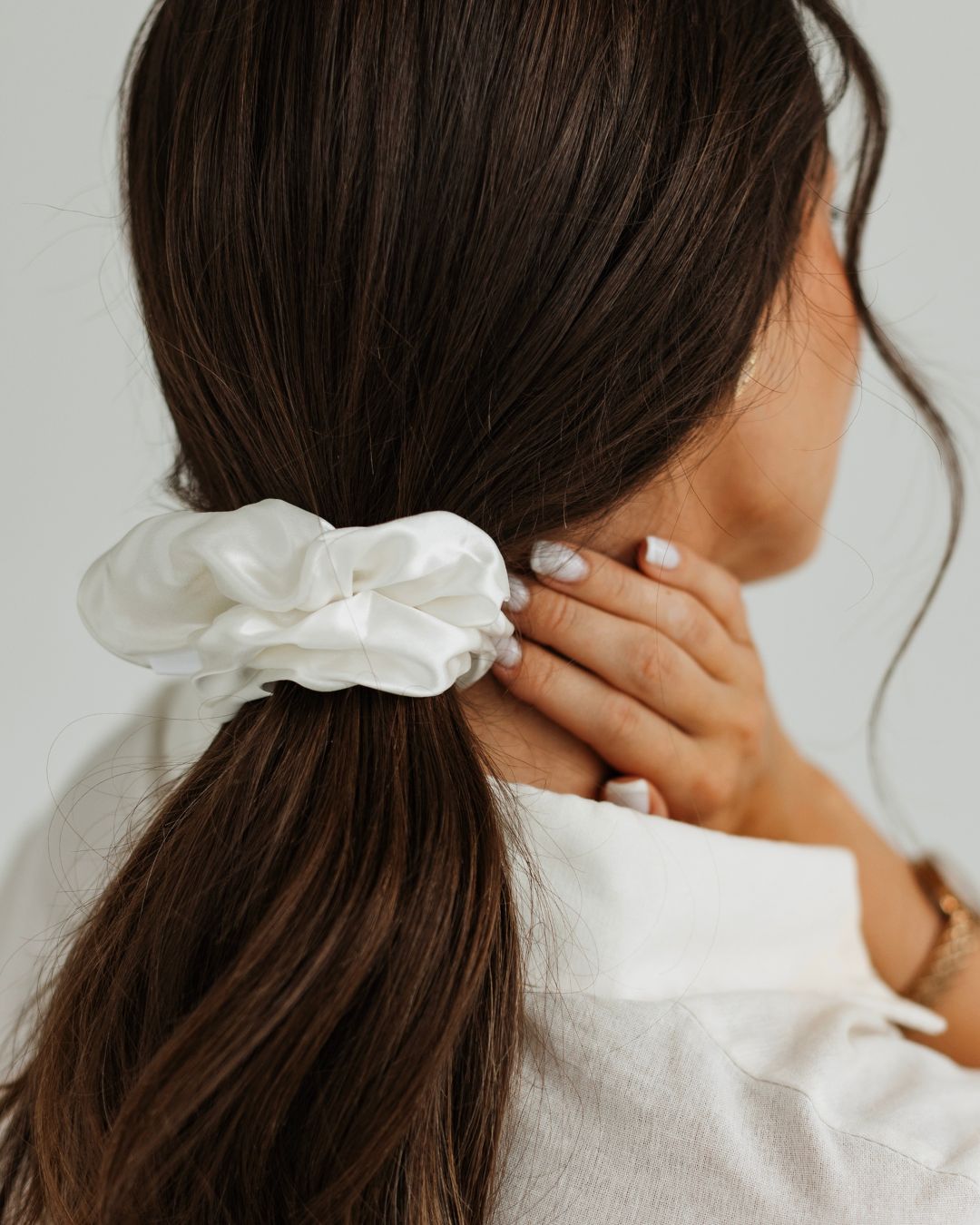
Is silk good for hair? In my view, the most useful answer is less dramatic than many beauty claims online. Silk can provide a smooth contact surface that helps reduce unnecessary mechanical friction, but it is not a treatment for hair loss, split ends or hair growth.
Because Kaleja Silks started with a silk heatless hair curler, I care about separating a realistic product benefit from a miracle claim. A gentler routine can be valuable without pretending that a textile changes hair biology.
What are the benefits of silk for hair?
The main practical benefit is mechanical. Hair touches pillows, hair ties, towels, clothing and styling tools every day. A smoother surface can create less snagging and pulling than a rougher contact surface.
This does not mean that silk makes hair biologically stronger. It means that you can reduce some avoidable mechanical stress in the routine around the hair.
Does a silk pillowcase help hair?
A silk pillowcase gives the hair a smooth surface during the hours you sleep. People with long, curly, dry or easily tangled hair may particularly notice the difference in how the hair feels in the morning.
The effect will not be identical for everyone. Hair structure, styling products, sleeping position, humidity and the rest of your routine all matter.
Are silk scrunchies better for hair?
A silk scrunchie has a smooth outer surface and is often wider than a thin elastic. That can make everyday contact gentler and distribute pressure over a larger area.
Even a silk hair tie can cause tension if it is worn extremely tight. Material does not cancel mechanical force. My preference is to combine a smooth material with a comfortable level of tension.
Do silk heatless curlers damage hair?
The biggest advantage of a heatless curler is that it creates shape without the high temperatures used by curling irons or straighteners. A silk cover adds a smooth contact surface.
The final result depends on hair type, curler diameter, moisture level, wrapping technique and how long the curler stays in the hair. Heatless does not mean you should wrap hair painfully tight.
Can silk stop hair breakage?
Silk cannot eliminate every cause of breakage. Chemical treatments, heat, brushing, tight hairstyles, hair structure and health can all play a role. What a smooth silk surface can do is reduce one source of unnecessary friction in the routine.
Does silk help hair grow?
No textile can directly accelerate the biological hair-growth cycle simply by touching the hair. If you are experiencing significant hair thinning or hair loss, the cause may be medical, hormonal, nutritional or mechanical and deserves appropriate assessment.
Can silk repair split ends?
No. Once a hair shaft has split, a pillowcase or scrunchie cannot fuse it back into an undamaged fibre. Hair products can temporarily improve feel and appearance, while trimming is the direct way to remove a split end.
Silk pillowcase vs satin for hair
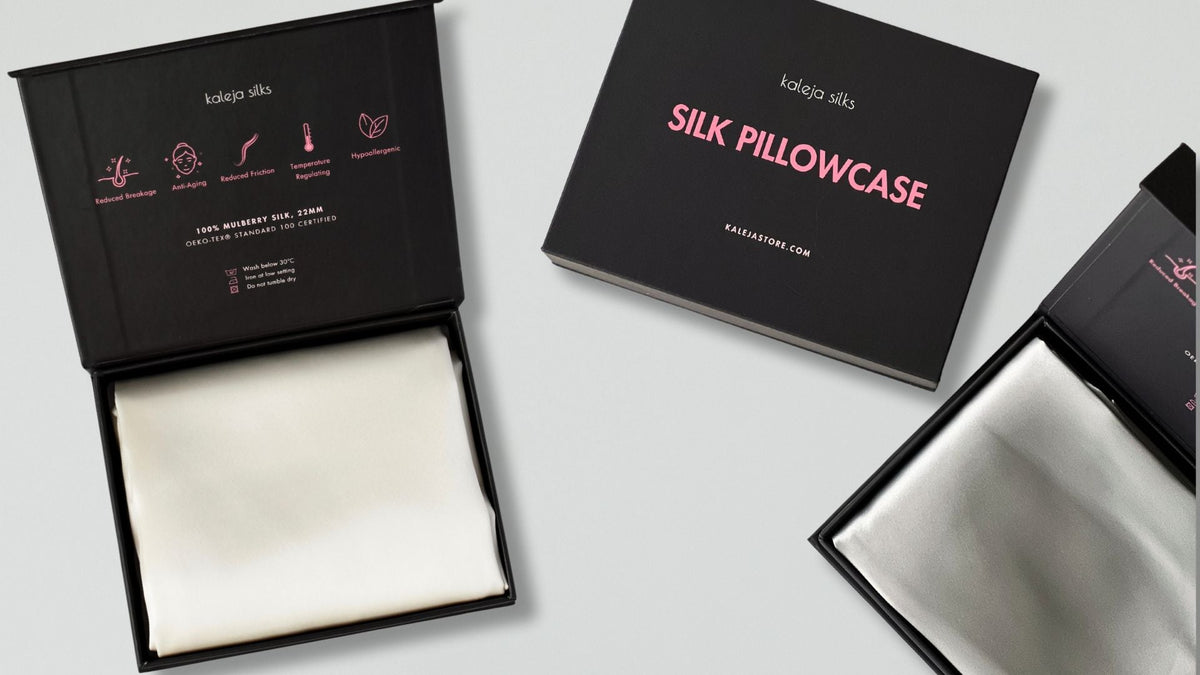
Both silk satin and polyester satin can provide a smooth surface. The difference is the fibre. If natural silk matters to you, check for 100% silk or 100% Mulberry silk rather than choosing only by the word satin.
A gentler hair routine I would build
- Use high heat only when you actually need it and use appropriate heat protection.
- Avoid wearing very tight hairstyles for long periods every day.
- Detangle hair in a way that suits your hair type and condition.
- Choose smoother contact surfaces for sleep and hair accessories.
- Use heatless styling when it gives you the result you want.
- Investigate persistent hair loss, scalp pain, itching or inflammation instead of treating it as an accessory problem.
Questions people ask about silk and hair
Is a silk pillowcase good for curly hair?
Curly hair can be particularly sensitive to tangling and friction, so many people prefer a smoother sleeping surface. The result depends on the person's curl pattern and overall routine.
Is silk good for fine hair?
A smooth surface can be useful for fine hair because fine strands can be mechanically delicate, but hair ties and curlers should still be worn with comfortable tension.
Is silk good for damaged or bleached hair?
Damaged hair often benefits from reducing unnecessary mechanical and heat stress. Silk can be one gentle material choice, but it does not reverse chemical damage.
Is a silk bonnet better than a silk pillowcase?
They solve the same general friction question in different ways. A bonnet contains the hair, while a pillowcase changes the sleeping surface. Preference depends on hairstyle, comfort and whether you want one or both.
Can I sleep with a silk heatless curler every night?
Comfort and tension matter. If the curler causes pulling, pain or scalp discomfort, adjust the technique or use it less often. Hair styling should not hurt.
My view on silk hair-care claims
I would rather explain a modest benefit accurately than promise a dramatic result that a fabric cannot deliver. Silk is valuable in hair care because it can make contact smoother and can be part of a heatless styling routine. That is already a useful job.
Share:
Silk Gift Guide: Gift Ideas for Her at Every Budget
How to Choose a Silk Pillowcase: 7 Things to Check