



Silk pillowcase vs cotton is one of the first comparisons I would make before spending more on bedding. Cotton is practical, familiar and easy to care for. Silk is smoother, needs gentler care and usually costs more. The useful question is not whether one fabric is universally better, but what actually changes when your hair and skin spend several hours against one surface every night.
As the founder of Kaleja Silks, I prefer to explain that difference without turning a pillowcase into a miracle treatment. For me, the main reason to choose silk is simple: a smoother sleeping surface can reduce unnecessary friction against hair and skin, while the feel, care routine and price are very different from cotton.
Silk pillowcase vs cotton: the short answer
| Feature | Silk pillowcase | Cotton pillowcase |
|---|---|---|
| Surface feel | Very smooth and slippery | Varies by weave, usually less slippery |
| Hair friction | Smoother contact surface | Can create more drag depending on fabric |
| Care | Gentle washing and air drying are best | Usually more forgiving in regular laundry |
| Price | Higher for genuine silk | Usually lower |
| What to check | Fibre content and momme | Fibre content and weave |
Which creates less friction for hair?
A smooth silk surface generally creates less drag than a rougher textile. That can matter because hair repeatedly moves across the pillow as you change position during sleep.
I would describe this as reducing one source of avoidable mechanical stress, not as making hair stronger from the inside. If your hair is long, curly, dry, colour-treated or easily tangled, the difference in surface feel may be especially relevant.
Is silk better than cotton for curls?
For curls, the attraction is that a smoother surface can disturb the curl pattern less as you sleep. It does not replace leave-in products, conditioning or styling, but it can make the sleeping surface less grabby.
If you want the hair-specific version, read Silk Pillowcase for Hair.
Which is gentler for skin?
Silk can feel gentler because the face moves across a very smooth surface. This may mean less mechanical drag and fewer temporary fabric creases.
I would not say this makes silk an acne treatment or an anti-ageing treatment. Cotton itself is not "bad for skin" either. Cleanliness, detergent, skincare products, skin conditions and how often you change bedding all matter.
Does cotton absorb more than silk?
Cotton is highly absorbent. Silk behaves differently and often feels less absorbent at the surface. Some people prefer that feel when they use night skincare or have dry hair.
I would still avoid claiming that skincare becomes more effective simply because you changed pillowcase material. The defensible difference is how the textiles feel and interact with moisture at the surface.
Which is cooler to sleep on?
Both materials can be comfortable. Temperature feel depends on fabric construction, room temperature, humidity, the rest of your bedding and your own body.
Silk often feels cool when you first touch it because of its smooth surface. I see that as a comfort characteristic, not evidence that a pillowcase will solve overheating or improve sleep quality by itself.
Which is easier to wash?
Cotton is the easier material for most households. It generally tolerates ordinary laundry routines better.
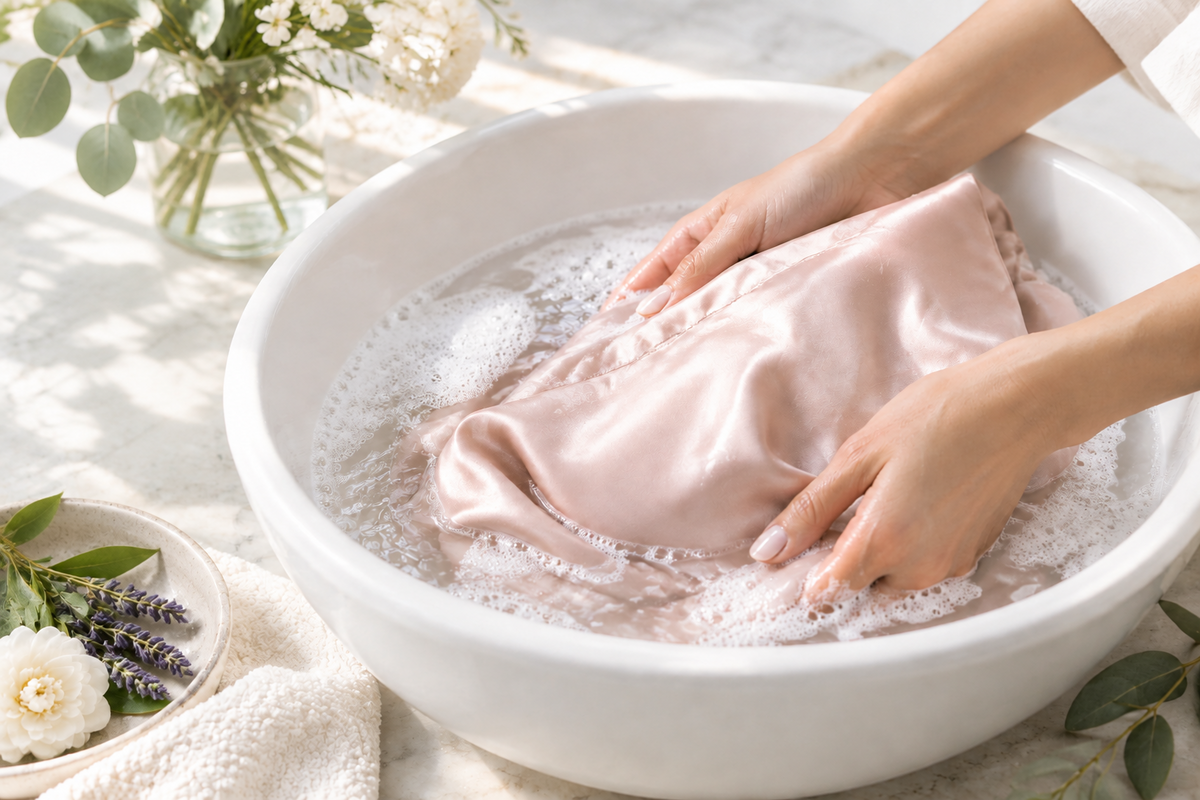
Silk needs more care. I prefer cool or lukewarm water, a silk-friendly detergent, low mechanical stress and air drying away from direct heat and strong sunlight. If you want a pillowcase you can throw into any wash without thinking, cotton has an obvious advantage.
Which lasts longer?
There is no universal winner because durability depends on fabric weight, construction, use and care. Heavy, well-made cotton can last a long time. A well-made silk pillowcase can also last for years when treated gently.
For silk, momme helps describe fabric weight. Our Kaleja Silks pillowcase is 22 momme, but momme is only one specification. Seams, zipper construction, washing and abrasion matter too.
Why does genuine silk cost more?
The fibre and manufacturing process are different from mass-market cotton. If I pay more for silk, I want transparent product information rather than vague luxury language.
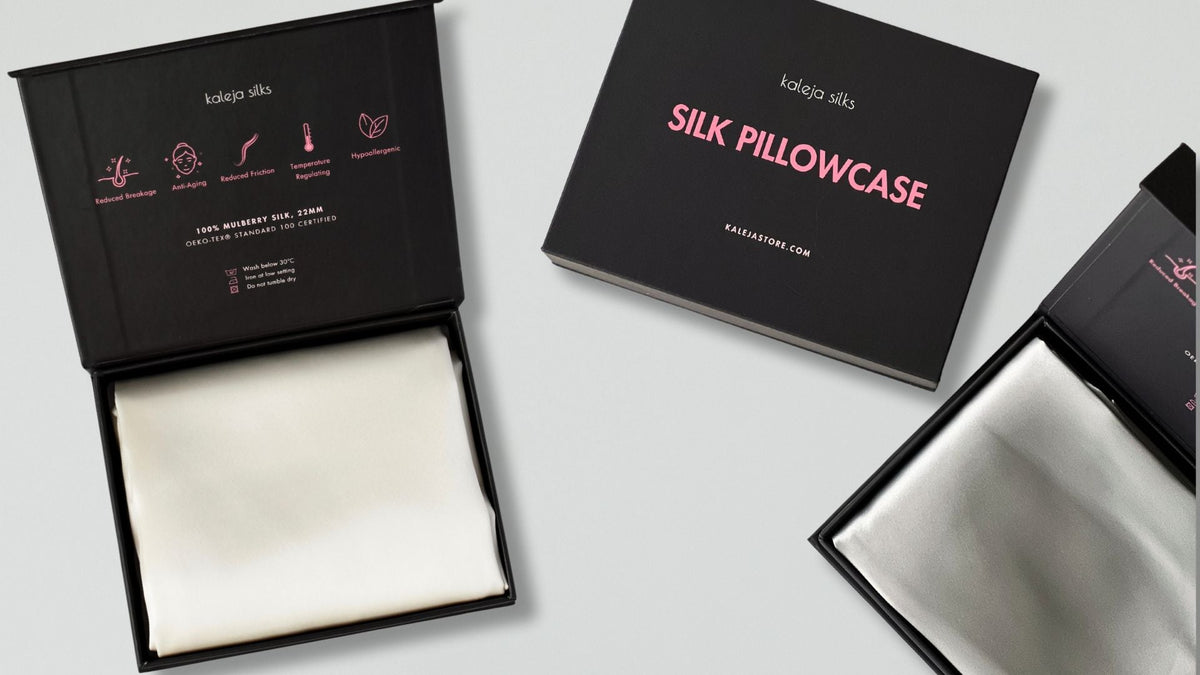
I look for fibre composition, momme, dimensions, closure, care instructions and reviews. Our Kaleja Silks pillowcase is 100% Mulberry silk, 22 momme, with a zipper closure and two size options.
Silk or cotton: which would I choose?
If I wanted the easiest laundry routine and lowest practical cost, I would choose cotton. If I wanted the smoothest possible contact surface and liked the feel of real silk enough to care for it properly, I would choose silk.
I do not think cotton needs to be made into the enemy for silk to make sense. They solve different priorities.
Frequently asked questions about silk vs cotton pillowcases
Is silk better than cotton for hair?
Silk is smoother and can create less mechanical drag. It does not repair or biologically strengthen the hair.
Is silk better than cotton for skin?
Silk can feel smoother and create less friction. It is not a treatment for acne, eczema or wrinkles.
Is cotton more breathable than silk?
Both can be breathable depending on fabric construction. Comfort is influenced by fibre, weave, weight, bedding layers and room conditions.
Is silk harder to care for?
Yes, in general. Genuine silk usually needs gentler washing and drying than everyday cotton bedding.
How do I know if a silk pillowcase is real?
Start with the fibre composition. Look for 100% silk or 100% Mulberry silk, then check whether the rest of the product information is consistent. See How to Tell if Silk Is Real.
Share:
Heatless Curler Reviews: What Customers Really Say
Is a Silk Pillowcase Worth It? What You Are Actually Paying For