


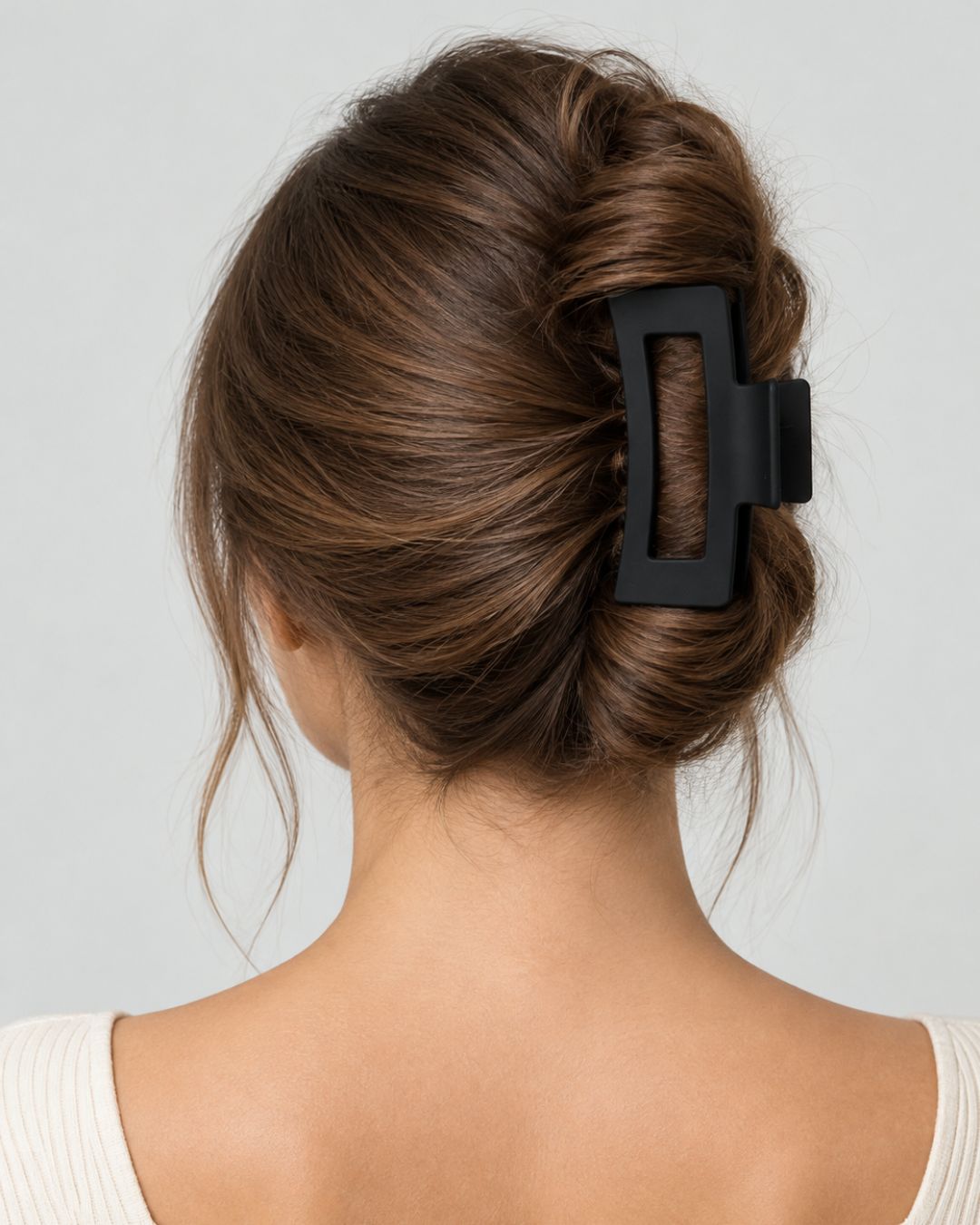
Is a silk pillowcase good for hair? It can be useful for one very practical reason: hair spends hours moving against the pillow while you sleep, and silk gives it a smooth contact surface. That can reduce unnecessary rubbing, snagging and disruption to curls or styling. It does not make hair grow faster, repair split ends or reverse chemical damage.
Because Kaleja Silks started with hair styling, I care about keeping this distinction clear. A gentler surface can matter without pretending that fabric changes hair biology.
How does a silk pillowcase affect hair overnight?
As you change position, hair slides, bends and presses against the pillow. The amount of friction depends partly on the surface. A smooth silk pillowcase gives hair less resistance than a rougher textile, which can make the night routine gentler.
This matters most as a repeated habit. No single night changes the structure of your hair, but reducing unnecessary rubbing is sensible if your hair is already dry, processed, long, curly or easy to tangle.
Can a silk pillowcase reduce tangles?
It may help reduce some tangling because a smoother surface creates less snagging while you move. It cannot prevent every knot, especially if hair is very long, textured, damaged or left loose in a way that allows strands to twist around one another.
If you wake with many tangles, think about the whole routine: detangling method, hair condition, sleeping style, whether you contain long hair gently and the pillow surface.
Is a silk pillowcase good for curly hair?
Curly hair often benefits from less disruption overnight because the curl pattern can lose definition through rubbing and movement. A smooth pillowcase can help the hair glide rather than catch as easily.
I would still treat silk as one tool among many. Curl products, moisture balance, haircut, bonnet use and how you refresh curls in the morning may matter more for the final result.
Is a silk pillowcase good for fine hair?
Fine hair can be mechanically delicate, so reducing unnecessary snagging may be useful. The same rule applies: do not expect a pillowcase to change strand thickness or hair density.
If fine hair becomes flat easily, the result may also depend on how you position it during sleep, not just the material underneath it.
Is silk useful for bleached or damaged hair?
When hair is already chemically processed or fragile, I think it makes sense to reduce avoidable mechanical and thermal stress where practical. A silk pillowcase can reduce one source of rubbing, but it cannot repair the internal damage created by bleaching or heat.
Can a silk pillowcase prevent hair breakage?
I would not promise prevention. Breakage has many causes, including chemical processing, heat, brushing, tight hairstyles, hair condition and health factors.
A smooth surface can reduce one source of mechanical friction, which is why I prefer wording such as "helps reduce unnecessary friction" rather than "prevents breakage".
Can a silk pillowcase repair split ends?
No. A split hair fibre does not fuse back together because it touched silk. Products can temporarily change feel and appearance, while trimming removes the split portion.
The useful role of silk is practical: make the sleeping surface smoother so the hair is exposed to less unnecessary rubbing.
Does a silk pillowcase help hair grow?
No textile directly accelerates the biological hair growth cycle. If you have unusual shedding, thinning or scalp symptoms, the cause may be medical, hormonal, nutritional or mechanical and deserves proper assessment.
Silk pillowcase vs satin for hair
Both silk satin and polyester satin can be smooth. The difference is the fibre. If natural silk matters to you, check for 100% silk or 100% Mulberry silk rather than relying on the word satin.
See my full material explanation in Silk vs Satin.
Silk pillowcase vs bonnet for hair
They address a similar friction question in different ways. A bonnet keeps hair more contained, while a silk pillowcase changes the surface underneath your head.
Some people prefer one, some use both. If you dislike sleeping in a bonnet, the pillowcase can be the simpler routine because there is nothing additional to wear.
Should you tie your hair on a silk pillowcase?
That depends on hair length, texture and comfort. If you tie it, avoid unnecessary tension. A loose silk scrunchie or another gentle method can help keep long hair contained, but a very tight hairstyle can create its own mechanical stress regardless of the pillowcase.
What silk specification should you look for?
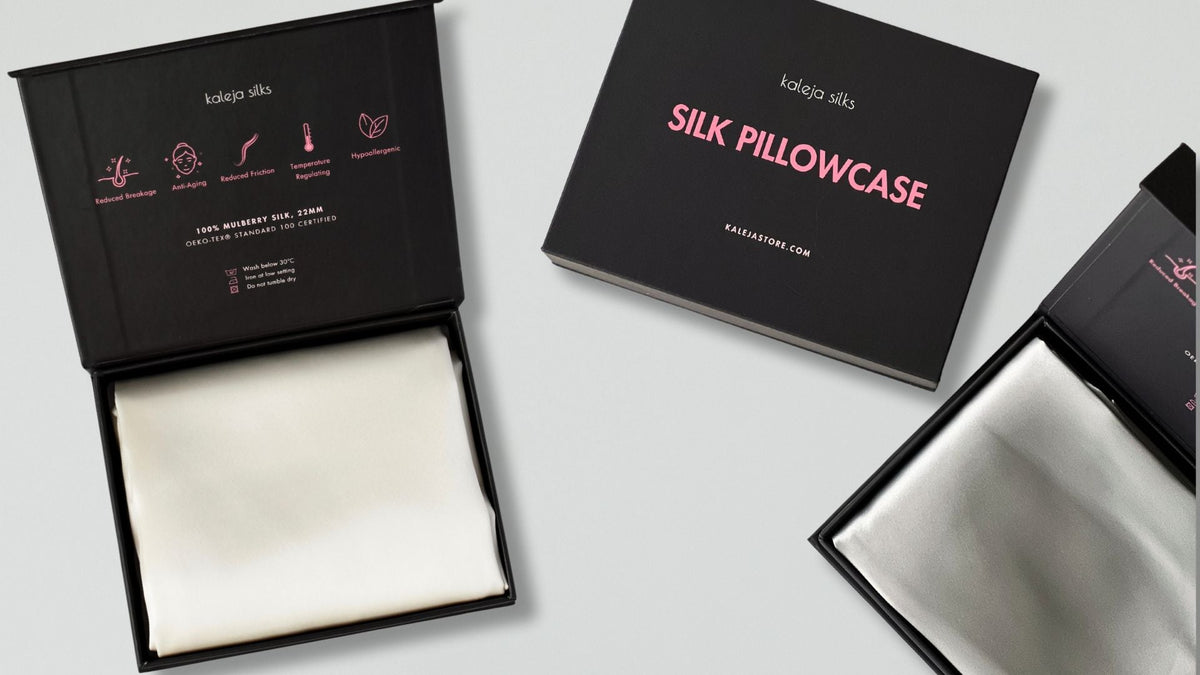
For a pillowcase, check that the seller clearly states fibre composition and momme. Our Kaleja Silks pillowcase is 100% Mulberry silk, 22 momme.
I would also check exact size, closure, seams and washing instructions. The silk pillowcase buying guide covers all seven checks.
My realistic hair routine principle
I prefer small, repeatable choices over miracle fixes: use heat thoughtfully, avoid painful tension, detangle appropriately and choose smoother surfaces where they make sense. A silk pillowcase fits that philosophy because it changes the environment around the hair without pretending to change hair biology.
Frequently asked questions about silk pillowcases for hair
Do silk pillowcases reduce frizz?
A smoother surface can create less rubbing, which may help some hair look less disturbed in the morning. Frizz also depends on humidity, hair condition, styling and products.
Are silk pillowcases good for long hair?
They can be especially useful for long hair because more hair is in contact with the pillow and there is more opportunity for tangling and friction.
Are silk pillowcases good for curls?
They can help disturb the curl pattern less during sleep, but they are only one part of a curly-hair routine.
Do silk pillowcases stop hair loss?
No. Hair loss has many possible causes and a pillowcase does not treat them.
Can silk repair damaged hair?
No. It can provide a smoother contact surface but cannot reverse chemical or structural damage.
Share:
Silk Pillowcase Benefits: What It Can and Cannot Do
Silk Pillowcase for Skin: Acne, Sleep Lines and Realistic Benefits