



What are the real benefits of a silk pillowcase? My answer is less dramatic than many beauty claims online. A genuine silk pillowcase gives your hair and skin a very smooth contact surface for the hours you spend sleeping. That can reduce unnecessary mechanical friction, disturb hairstyles less and simply feel more comfortable against the face. It cannot treat acne, stop biological ageing, repair split ends or make hair grow faster.
As the founder of Kaleja Silks, I would rather explain a realistic material benefit clearly than make a bigger promise that a textile cannot keep. For me, the value of silk starts with the fabric itself: smoothness, feel, construction and a nightly routine that is gentler by design.
What are the main benefits of a silk pillowcase?
- A smoother surface for hair: less drag can mean less unnecessary rubbing, snagging and disruption while you move during sleep.
- A smoother surface for skin: the face can move against the pillow with less friction than against a rougher textile.
- Less disturbance to styled hair: curls, blowouts and long hair may benefit from spending the night against a smoother surface.
- A distinctive material feel: genuine silk has a smoothness that many people simply prefer for comfort.
- A measurable specification: fibre content and momme let you compare actual products rather than rely on the word "silky".
Does a silk pillowcase reduce friction for hair?
This is the benefit I feel most comfortable explaining. Hair repeatedly moves across a pillow during sleep. A smoother textile creates less surface resistance than a rougher one, which can reduce one source of unnecessary mechanical stress.
That does not mean silk makes hair biologically stronger. Bleaching, heat, brushing, tight hairstyles, hair structure and health all affect breakage. A pillowcase changes only the contact surface.
If hair is your main reason for considering silk, continue with my dedicated guide to silk pillowcases for hair.
Can a silk pillowcase prevent split ends?
No pillowcase can repair an already split hair fibre. Once a hair shaft has split, a textile cannot fuse it back together. What silk can do is help reduce avoidable rubbing during the hours your hair is in contact with the pillow.
I think this distinction matters. "Less unnecessary friction" is realistic. "Prevents split ends" is too absolute because split ends have many causes.
Can a silk pillowcase make hair grow faster?
No. Hair growth is a biological process. A pillowcase cannot accelerate the growth cycle simply by touching the hair.
Silk can still be part of a gentler routine, particularly for long, curly, dry, colour-treated or easily tangled hair. I explain broader silk and hair claims in Silk for Hair: Benefits and Limits.
What can a silk pillowcase realistically do for skin?
For skin, I focus on surface friction. A smooth fabric can feel gentler against the face and can create fewer temporary fabric creases than a rougher or heavily wrinkled pillowcase.
I would not sell a silk pillowcase as an acne treatment or a wrinkle treatment. Acne and skin ageing have many biological and environmental causes that a textile cannot control.
For the detailed version, see Silk Pillowcase for Skin: Acne, Sleep Lines and Realistic Benefits.
Does a silk pillowcase prevent wrinkles?
I would not use the word prevent. A smoother surface can reduce fabric drag and temporary sleep creases, but permanent wrinkles are not caused by one pillowcase material alone.
For me, the honest benefit is comfort and lower friction, not a promise to stop ageing.
Does a silk pillowcase help acne?
A clean, smooth pillowcase can be a sensible part of a skin-friendly routine, but silk itself is not acne medicine. If hair or skincare product residue collects on bedding, regular washing matters regardless of the fabric.
If acne is persistent, painful or scarring, appropriate skincare or dermatological advice matters much more than switching pillowcase material.
Does silk improve sleep quality?
Comfort can support a pleasant sleep environment, but a silk pillowcase is not a treatment for insomnia or poor sleep. Room temperature, light, noise, stress, health and sleep habits matter far more.
If you simply prefer the feel of silk, that preference is a perfectly good reason to use it. A product does not need a medical claim to make a nightly routine more enjoyable.
What should you look for in a silk pillowcase?
Look beyond benefit lists and check the product itself. Fibre content, momme, dimensions, closure, seams, care instructions and seller transparency tell you much more about what you are buying.
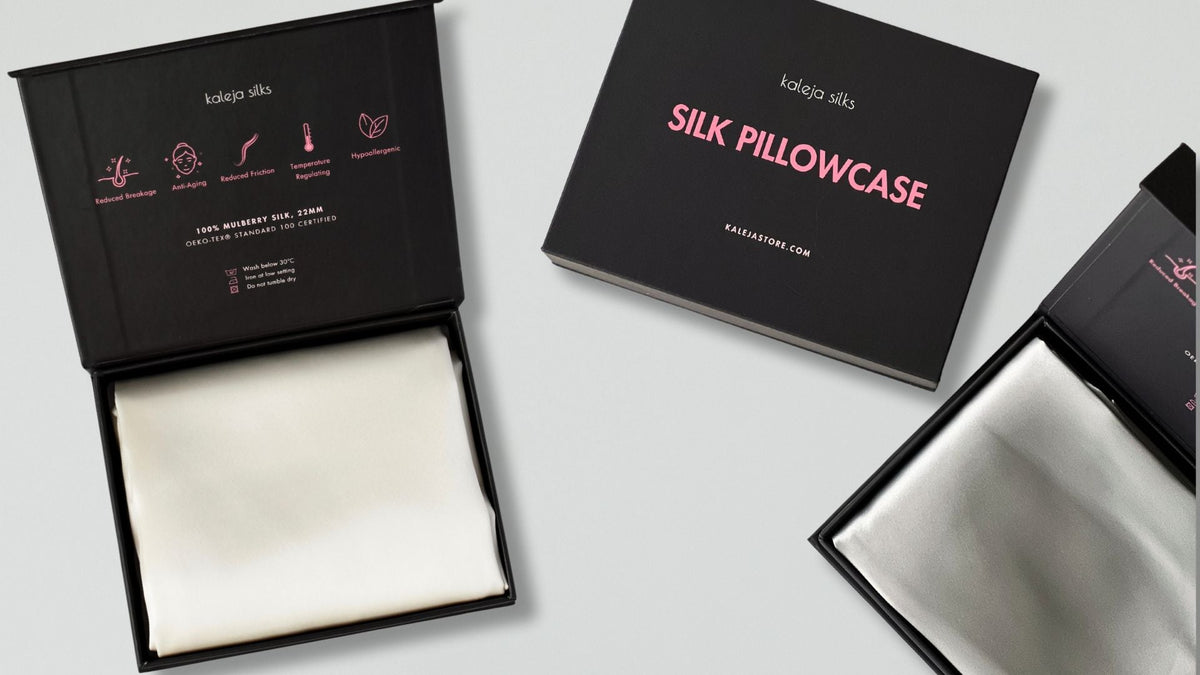
Our Kaleja Silks Mulberry Silk Pillowcase is specified as 100% Mulberry silk, 22 momme, with a zipper closure and 50 x 60 cm or 50 x 70 cm size options. For a full checklist, read How to Choose a Silk Pillowcase.
My rule for judging silk pillowcase claims
I use a simple test: could the material itself realistically cause the promised effect? A smoother surface can change friction. Fabric weight can be measured. Care requirements can be tested. Those are concrete properties.
Claims about curing acne, stopping ageing, changing hair growth or fixing damaged hair go much further than the textile itself. I would rather keep those claims out of the conversation.
Frequently asked questions about silk pillowcase benefits
What is the biggest benefit of a silk pillowcase?
For me, it is the smooth contact surface. That can reduce unnecessary friction against hair and skin while you sleep.
Is a silk pillowcase good for hair?
It can be part of a gentler hair routine because the surface is smooth. It does not repair damaged hair or directly increase hair growth.
Is a silk pillowcase good for skin?
It can feel gentle and create less friction, but it is not a treatment for acne, wrinkles or other skin conditions.
Is 22 momme good for a silk pillowcase?
22 momme is a substantial pillowcase fabric weight and a useful specification to compare. Momme should still be considered together with fibre content and construction.
Is silk or satin better?
Silk is a fibre and satin is a weave, so they are not direct opposites. If you specifically want natural silk, check the fibre composition. I explain the difference in Silk vs Satin.
Share:
How to Get Blowout Curls Without Heat: My Four-Rod Method
Silk Pillowcase for Hair: What It Helps With and What It Does Not